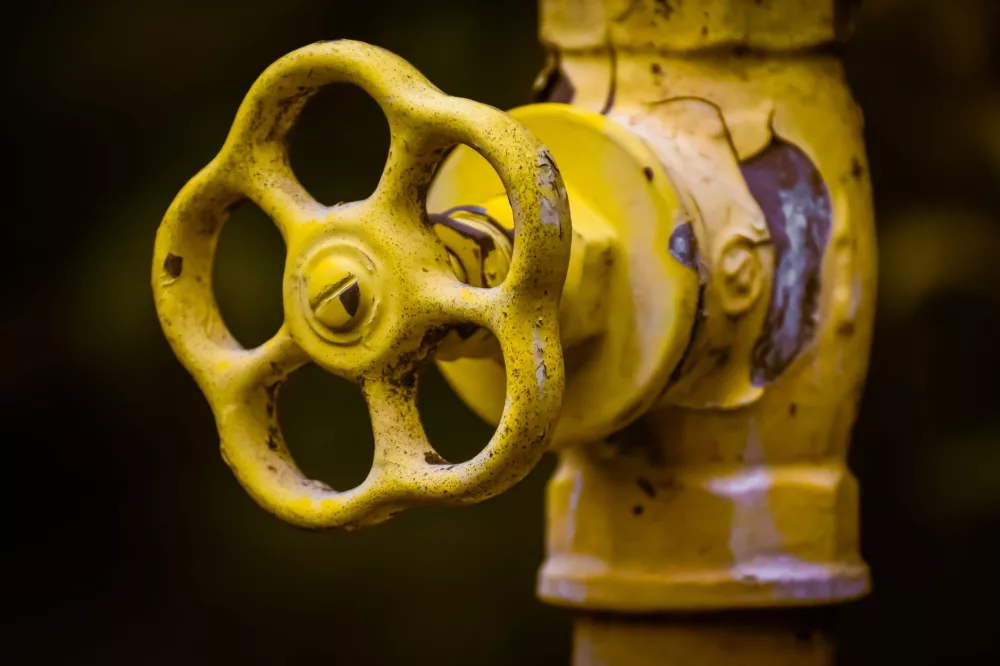
When we talk about the unsung heroes of countless industrial processes, I immediately think of valves. But not just any valve; I'm referring to what's often generically called a 'PC valve,' or more accurately, a Process Control valve. This isn't about your computer's components; it's about those critical devices that manage the flow of liquids, gases, and slurries in just about every system imaginable. Without them, our modern world wouldn't function—period. My goal here is to unravel the complexities of these crucial components, exploring what they are, how they work, and why they're so incredibly important.
What Exactly is a Process Control (PC) Valve?
At its core, a process control valve is a mechanical device that regulates the flow rate of a fluid (liquid, gas, or slurry) through a pipe or system. It achieves this by altering the size of the flow passage as directed by a controller. Think of it as a finely tuned gatekeeper, constantly adjusting its position to maintain desired conditions like pressure, temperature, or liquid level. It's not just an on/off switch; it's a sophisticated instrument capable of modulating flow with precision. We rely on them to keep things stable, safe, and efficient.
Why Are They So Important?
Honestly, their importance can't be overstated. Imagine a chemical plant where reactions depend on exact proportions of ingredients. Or a power plant where steam flow must be meticulously managed to prevent overpressure. Process control valves are the muscle behind the brain of an automation system. They translate the electrical or pneumatic signals from a controller into physical action, ensuring that processes run smoothly and safely. They're often the final control element in a loop, making them absolutely essential for maintaining process variables within specified limits. Without 'em, things would go haywire pretty quickly.
The Anatomy of a PC Valve: Key Components I See
While designs vary wildly depending on the application, most PC valves share a few fundamental parts:
- The Valve Body: This is the main pressure boundary housing of the valve. It's the part that gets bolted into the pipeline, and it contains the fluid passage. Its shape and material are critical for handling pressure, temperature, and corrosive media.
- The Bonnet: Connected to the body, the bonnet provides a sealed housing for the valve stem and packing. It's essential for preventing leaks to the atmosphere.
- The Trim: This refers to the internal, removable parts that come into contact with the fluid and are responsible for regulating flow. It typically includes the plug (or disc), seat, stem, and cage. The trim is where the real flow magic happens!
- The Actuator: This is the component that provides the power to move the valve stem and change the flow opening. Actuators can be pneumatic (air-driven), electric (motor-driven), or hydraulic (fluid-driven). They receive signals from the controller.
- The Positioner: Often coupled with the actuator, especially for pneumatic types, a positioner is a control device that ensures the valve stem reaches the exact position commanded by the controller, regardless of friction or pressure changes. It's like the fine-tuner for the actuator.
Different Types of PC Valves I've Encountered
You'd be surprised by the sheer variety out there. Each type has its strengths and is best suited for particular tasks. Let's look at some common ones:
Globe Valves: The Throttling Experts
I find globe valves to be excellent for throttling service, meaning they're great at regulating flow. They have a disc that moves perpendicular to the flow path, allowing for precise control. Their internal design, with a zig-zag flow path, introduces a higher pressure drop, which can be a downside in some applications, but it helps with that fine control.
Ball Valves: Quick Shut-off Champs
For quick, tight shut-off and minimal pressure drop, ball valves are often my go-to. They feature a spherical plug with a bore through it. A quarter-turn rotates the ball, either aligning the bore with the pipe for full flow or turning it perpendicular to block the flow completely. They're not usually ideal for throttling, though, as they can wear out quickly in intermediate positions.
Butterfly Valves: Compact and Versatile
Butterfly valves use a rotating disc, like a butterfly wing, to control flow. They're lightweight, compact, and offer a quick on/off action with a quarter-turn. While some designs are good for throttling, they generally aren't as precise as globe valves for fine control. I often see them in larger pipe sizes because of their cost-effectiveness and ease of installation.
Gate Valves: The Full-Open, Full-Closed Workhorses
If you need a valve that's either fully open or fully closed, with minimal resistance to flow when open, a gate valve is often the answer. They use a wedge-shaped gate that moves up and down to block or permit flow. They're generally not suitable for throttling because the gate's partial closure can lead to vibration and seat erosion. When you need a clear, unobstructed path, these are fantastic.
Diaphragm Valves: Perfect for Corrosive or Slurry Service
I've seen diaphragm valves shine in applications involving corrosive fluids, abrasive slurries, or ultra-pure media. They use a flexible diaphragm that presses against a weir to control flow. The fluid is isolated from the bonnet and stem, which prevents contamination and corrosion of moving parts. This makes them super hygienic too, which is a big plus in certain industries.
Selecting the Right PC Valve: What I Consider
Choosing the correct valve isn't just about picking one off the shelf; it's a careful process. Here are some of the key factors I always keep in mind:
- Fluid Characteristics: What's flowing through it? Is it corrosive, abrasive, viscous, or hazardous? This dictates material selection.
- Pressure and Temperature Ratings: The valve must be able to withstand the system's operating pressure and temperature without failing. It's a non-negotiable safety concern.
- Flow Requirements: Do we need precise throttling, tight shut-off, or simply on/off control? This helps narrow down the valve type.
- Pressure Drop: How much pressure can we afford to lose across the valve? Some valves inherently cause more pressure drop than others.
- Actuation Method: Will it be pneumatic, electric, or hydraulic? This depends on available plant utilities and control system requirements.
- Cost: Obviously, budget plays a role, but never at the expense of safety or performance.
- Maintenance: How easy is it to maintain, repair, and replace parts? Downtime is expensive, so maintainability is a big deal.
Maintaining Your PC Valves: My Best Practices
Like any mechanical device, PC valves require regular maintenance to ensure their longevity and reliable operation. Ignoring them is just asking for trouble. Here are some things I typically recommend:
- Routine Inspections: Visually check for leaks, corrosion, actuator damage, or unusual noises. Catching small issues early can prevent big problems.
- Lubrication: Moving parts, especially the stem and packing, often need proper lubrication to reduce friction and wear.
- Packing Adjustment/Replacement: The packing material around the stem creates a seal. Over time, it can wear out or become loose, leading to leaks. Adjusting or replacing it is common.
- Calibration: For control valves with positioners, periodic calibration ensures they are accurately responding to control signals. This is critical for process stability.
- Seat and Disc Inspection: Over time, wear and tear can degrade the sealing surfaces, leading to leakage when closed. These components might need to be reconditioned or replaced.
Honestly, a well-maintained valve is a happy valve, and it saves a ton of headaches (and money) down the line. Preventative maintenance is key to keeping our processes running smoothly.
Wrapping Things Up
So, there you have it. The PC valve, in its many forms, is an indispensable component in industrial automation and process control. From managing the delicate balance of chemicals in a pharmaceutical plant to ensuring the safe operation of a power station, these devices are constantly working behind the scenes. I hope this gives you a much clearer picture of their vital role and the thought that goes into their selection and upkeep. They might seem like simple pieces of metal, but trust me, their engineering and functionality are incredibly sophisticated and essential for just about everything we do.